
Garages have a habit of collecting the things people are not quite ready to deal with. Half used paint, blunt tools, broken appliances, boxes of cables, garden chemicals, offcuts of timber and family items can sit together for years until the space becomes hard to use.
A good garage clearance is not just about loading everything into a van. It is a careful sorting job that separates what can be reused, what needs recycling, what must be treated with extra care and what is genuine waste.
Why garage clearance needs careful sorting
A garage can look simple from the doorway, but the contents are often mixed and awkward. One corner might contain household storage, another might hold decorating supplies, and another might hide electrical items, metal tools, oil, aerosols or timber. Treating all of it as ordinary rubbish is rarely the right approach.
Professional garage clearance services usually begin by identifying categories of items before removal starts. This helps decide what can be donated, sold, reused, recycled or disposed of through the correct waste route. It also prevents useful items from being damaged in the rush to clear space.
The first pass is normally practical rather than dramatic. Clear access is made, unstable stacks are dealt with, sharp or heavy items are separated, and anything that might leak, stain or break is set aside. This makes the job safer and keeps the driveway, hallway and working area orderly while items are being moved.
Sorting also protects the homeowner. When a clearance team understands what is being removed, they can give clearer advice about items that need special handling, such as paint, solvents, electrical appliances and anything that may have sentimental or resale value.
How paint, tins and decorating materials are handled
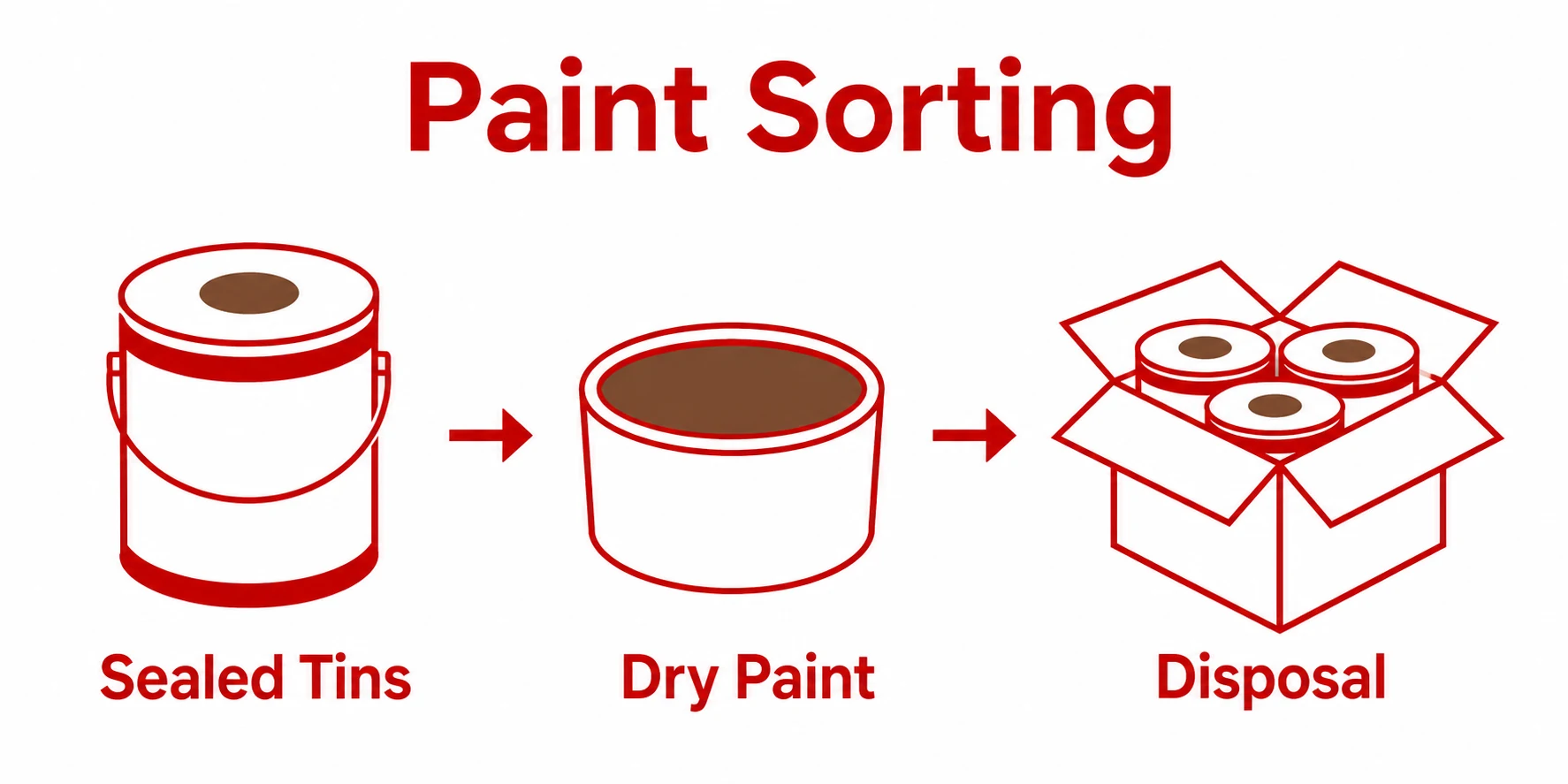
Paint is one of the most common garage clearance problems. It is also one of the items that should not be casually thrown into general waste, especially when tins still contain liquid paint, solvent based products or old decorating chemicals.
A professional team will usually separate paint and decorating supplies into groups. Empty tins, dried out water based paint, usable leftover paint, solvent based paint, thinners, white spirit, aerosols and sealants may all need different handling. The exact route can depend on the item, its condition and local waste acceptance rules.
Liquid paint needs particular care because it can spill during loading, mark driveways, damage other items and create a disposal issue. Tins are checked for secure lids, obvious leaks and labels where they are still readable. If something is unstable, it should be kept upright and contained rather than stacked under heavy items.
Reusable paint may sometimes be suitable for community reuse schemes or donation, provided it is in good condition and clearly identifiable. Paint that is very old, separated, contaminated or unlabelled is less likely to be useful and may need specialist disposal. Solvent based paint, paint thinner and similar products are generally treated more cautiously because they can fall under hazardous waste handling requirements.
For the householder, the best preparation is simple. Do not pour paint down drains, do not mix unknown liquids together, and do not try to hide paint tins among ordinary rubbish. Keep lids on where possible, leave labels visible and tell the clearance team if anything is leaking or smells strongly of solvent.
What happens to tools, hardware and workshop items
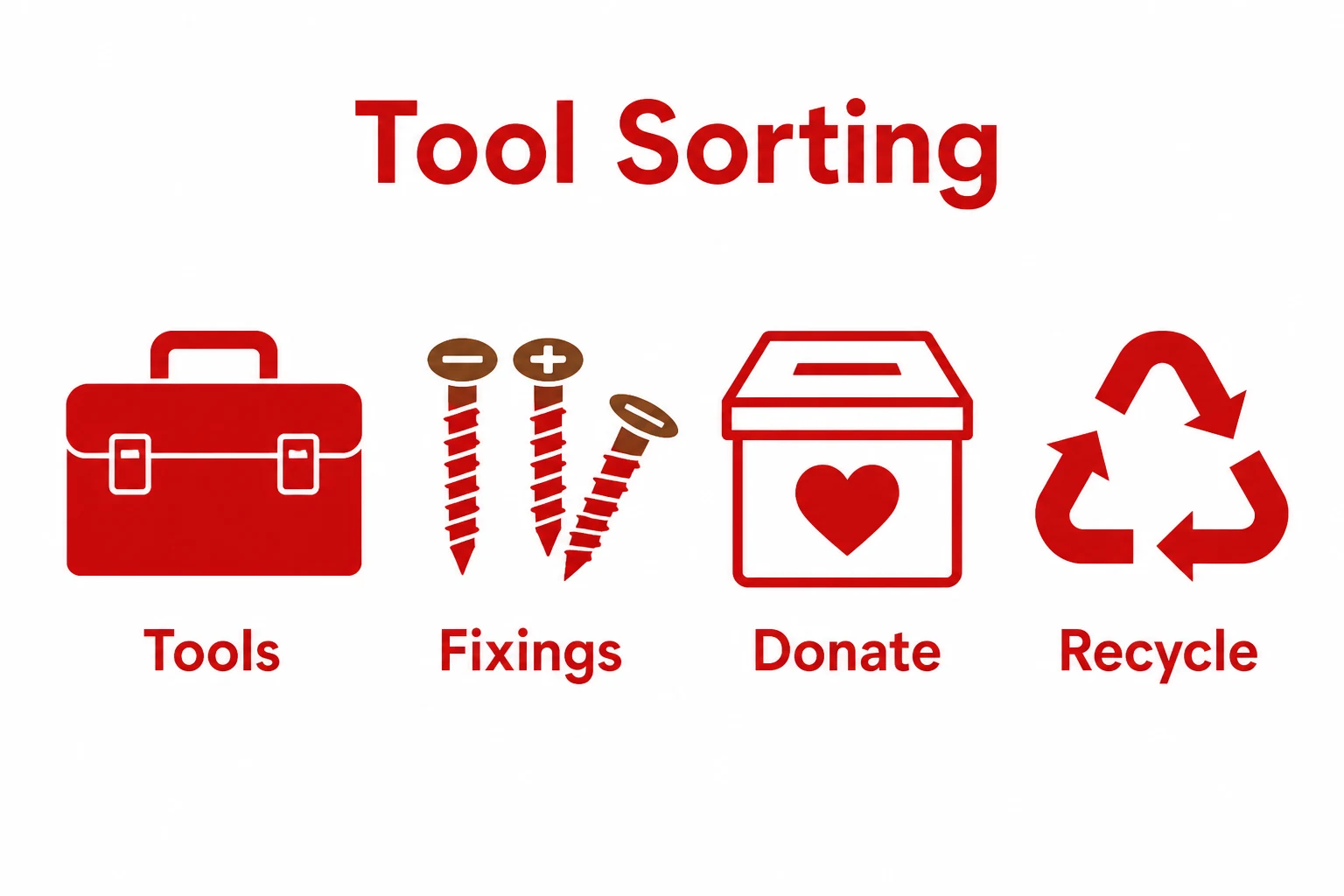
Old tools are often more useful than they first appear. Hand tools, toolboxes, ladders, screws, fixings, clamps and garden equipment may be suitable for reuse if they are safe, clean enough to handle and still functional. A professional clearance should avoid treating every dusty item as waste.
The sorting process usually separates tools into reusable, recyclable and unsafe categories. A working drill, clean toolbox or sturdy hand saw may be kept apart from rusted blades, broken power tools, loose nails or damaged electrical leads. Sharp items should be contained so they do not tear bags, injure handlers or scratch floors and door frames during removal.
Some garages also contain items that might have value beyond everyday use. Older tools, specialist equipment, workshop cabinets, collectable signage or boxed items can sometimes be worth checking before disposal. Where there is any doubt, it is sensible to pause and assess rather than clear everything in one movement. The same principle applies in wider property work, where careful handling of antique and valuable items can prevent avoidable loss.
Metal tools and hardware often have recycling potential, even when they are no longer usable. Batteries, chargers and power tools should not simply be mixed with general waste. Items with plugs, cables or batteries may need to be routed as electrical waste, and removable batteries should be identified where possible.
This kind of sorting makes the clearance more useful. It can reduce waste, recover value, support donation routes and leave the customer with a clearer idea of what has actually left the property.
Old appliances and electrical items need the right route
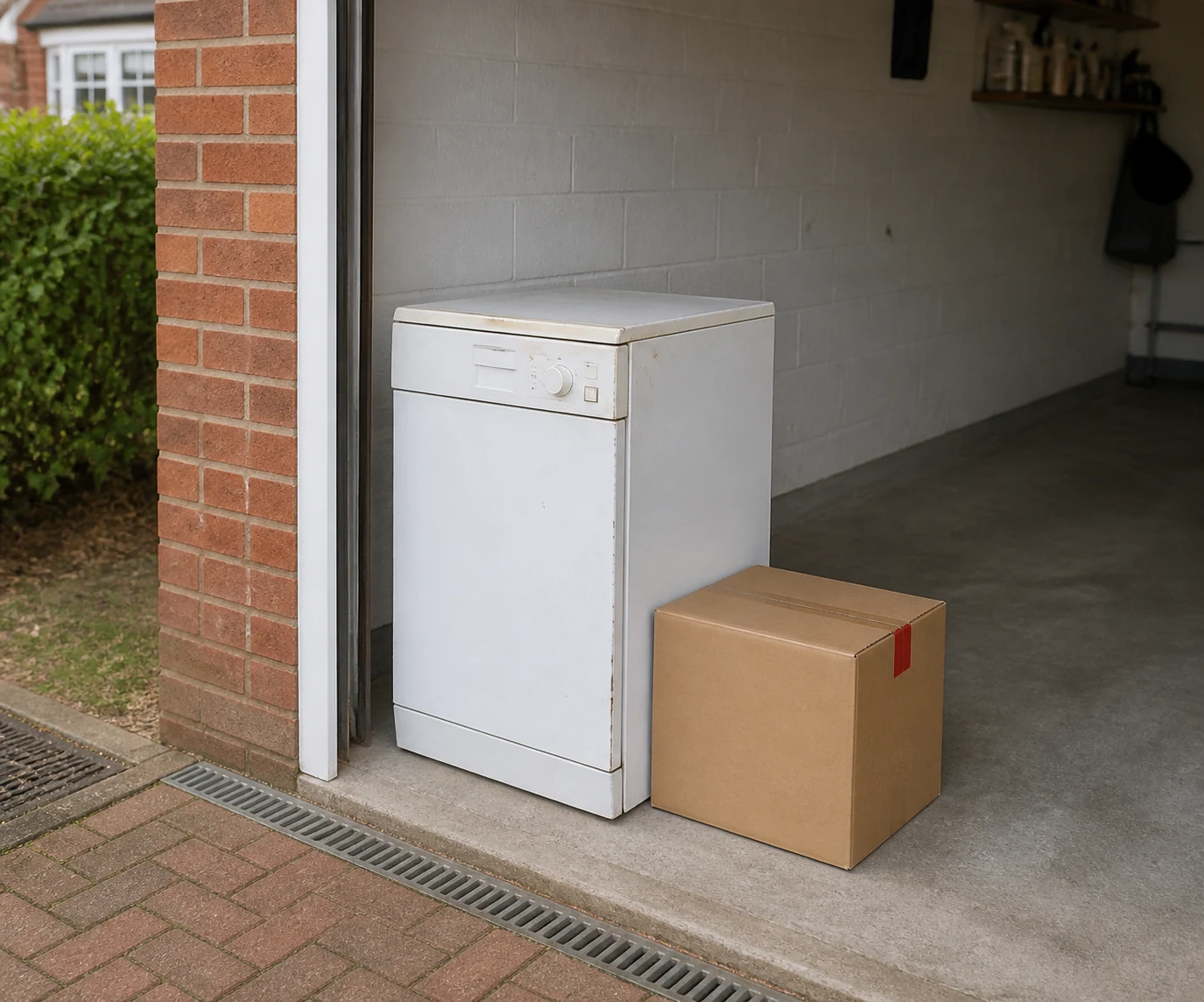
Garages often become the last stop for old appliances. Fridges, freezers, microwaves, heaters, pressure washers, radios, televisions, lamps, lawn equipment and boxes of chargers can all end up stored together. Some may still work, while others are there because nobody knew what to do with them.
Electrical and electronic items should be separated from ordinary waste. In the UK, waste electrical items are commonly managed under WEEE rules, which cover many things with a plug, cable or battery. A professional clearance team should recognise these items and keep them apart for appropriate recycling or disposal.
Large appliances need extra planning because of their weight, shape and possible contents. A freezer may need checking before it is moved. A fridge may require careful handling because certain components and gases must be managed through proper routes. Microwaves, heaters and small appliances may be easier to lift, but they still need to be separated from general garage rubbish.
Electrical items that still work may be suitable for reuse if they are complete, safe and acceptable to the receiving organisation. However, damaged plugs, exposed wiring, missing parts and unknown condition can limit donation options. A responsible team will not present unsafe electrical goods as reusable just to avoid disposal.
Cables, chargers and small electronics are worth keeping in a separate box during sorting. They are easy to lose among general clutter, but they can often be recycled properly when grouped together. This also prevents trip hazards while the clearance is underway.
Keeping the driveway and work area orderly
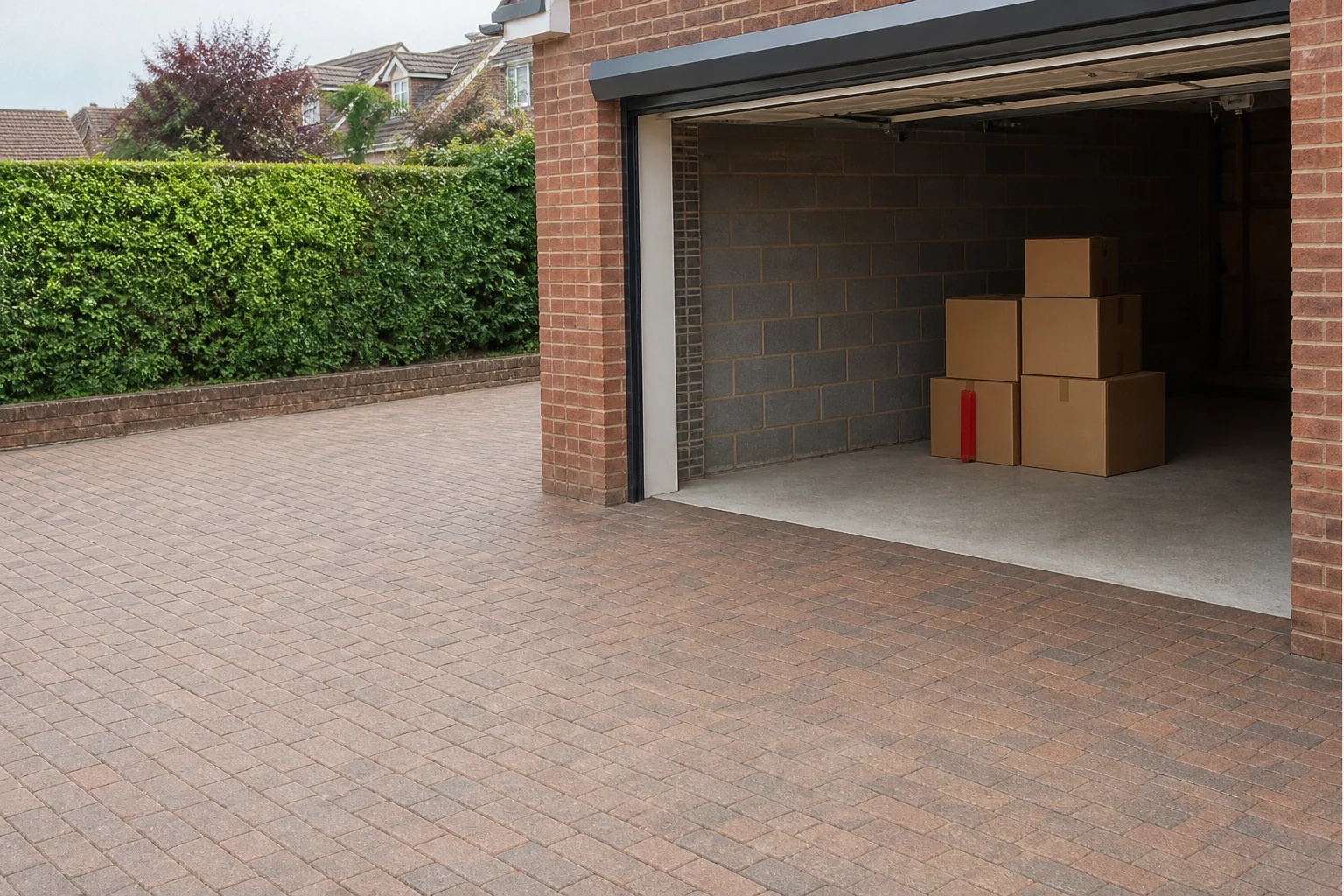
A tidy clearance is not just nicer to look at. It helps the job run safely and prevents confusion. Garages are often cleared through narrow doors, across driveways, past parked cars or through shared access points, so the way items are staged matters.
A good team will usually create simple working zones. Reusable items, recycling, general waste, electricals, liquids and items needing customer approval may be placed separately before loading. This makes it easier to check decisions as the work progresses and reduces the chance of the wrong item being taken.
Order also protects the property. Heavy appliances should not be dragged across surfaces where lifting or carrying is possible. Paint tins should not be balanced on top of boxes. Sharp metal, broken glass and timber with nails need containment. Walkways should stay clear so people are not stepping over cables, bags or loose tools.
Driveway order is especially important where the customer wants to keep certain items. A rushed pile can make it difficult to tell what is going, what is staying and what needs a final decision. Clear grouping allows the customer to review belongings without feeling pressured or overwhelmed.
Professional sorting can also connect garage clearance with other practical clearances around a property. For example, outdoor equipment, plant pots, tools and timber may overlap with the type of work discussed in professional garden clearances, while stored household goods may be better suited to reuse or donation.
Reuse, donation and responsible disposal
Many garage items are not waste in the ordinary sense. Shelving, bicycles, gardening tools, unopened supplies, storage boxes, sports equipment and small furniture may still be useful. The value of a professional clearance is that these items are identified before they are mixed with broken or contaminated waste.
Reuse usually depends on condition, safety and demand. Clean, complete and functional items have the best chance. Items that are damp, mouldy, unsafe, heavily rusted or missing essential parts may not be suitable, even if they once had value.
Donation can be a positive route where items are appropriate. Some unwanted possessions may support community groups or charity partners, especially when they are practical, safe and easy to pass on. If that matters to the homeowner, it is worth asking how the clearance company approaches unwanted items that can help others.
Responsible disposal is the final part of the process, not the whole story. Waste should be moved by a registered carrier, and householders can ask for the company registration details if they want reassurance. The Environment Agency public register exists so people can check waste carrier, broker and dealer registrations.
This matters because the person arranging the clearance still has a duty to take reasonable care over where their waste goes. Choosing a proper clearance service helps avoid fly tipping risks and supports better recycling, reuse and disposal decisions.
- Garage clearance works best when paint, tools, appliances, reusable goods and waste are sorted before loading.
- Liquid paint, solvents, aerosols and unknown chemicals need cautious handling and may require specialist disposal routes.
- Electrical items should be kept separate from general rubbish so they can be reused or recycled correctly where suitable.
- A clear driveway and staged work area help protect the property, reduce confusion and keep the clearance moving smoothly.
- Reusable tools, storage items and household goods should be identified before damaged or unsafe waste is removed.
Frequently asked questions
Can old paint tins be taken during a garage clearance?
Yes, but they should be identified clearly before removal. Empty tins, dried water based paint, liquid paint and solvent based products may all need different handling. Do not pour paint away or mix unknown liquids together before the team arrives.
What happens to old tools from a garage?
Usable tools may be separated for reuse or donation, while damaged, rusty or unsafe tools may be recycled or disposed of. Sharp items, loose blades, nails and broken metal should be contained carefully during the clearance.
Can a clearance company remove fridges, freezers and electrical appliances?
Many professional clearance companies can remove appliances, but electrical items should be kept separate from general waste. Large appliances may need particular care because they can require approved recycling or disposal routes.
How should I prepare my garage before the clearance team arrives?
You do not need to fully sort the garage yourself. It helps to mark anything you want to keep, point out liquids or hazardous items, keep access as clear as possible and mention any items that may have sentimental or resale value.
Arrange a practical garage clearance
If your garage contains paint, tools, old appliances and years of mixed storage, a professional clearance can help sort it properly and leave the space easier to use.