Clearing a flat can feel more complicated than clearing a house because every item has to travel through shared spaces. Communal doors, narrow stairs, lifts, corridors, entry systems and parking all affect how the job is planned.
A good clearance team looks at those details before the lifting starts. The aim is simple: keep belongings moving safely, protect the building, reduce disruption for neighbours and leave the flat and shared areas tidy.
Why access planning matters in flat clearance
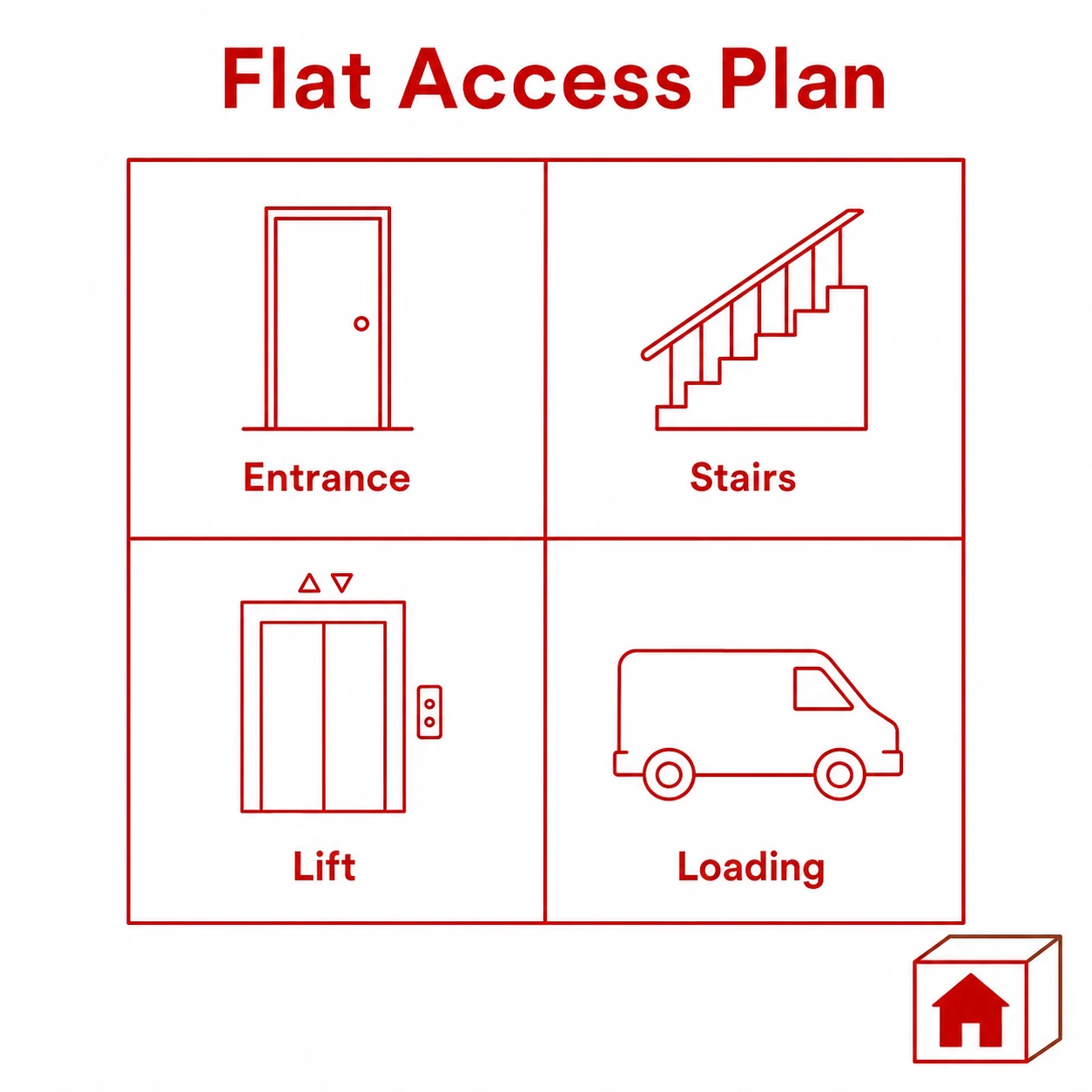
Flat clearance is not only about removing furniture, bags, boxes and loose items from the property. It is also about understanding the route out. In many blocks, the team may need to move through a communal entrance, along a hallway, down stairs, into a lift, across a lobby and out to a parking area. Each part of that route can affect the pace and order of the work.
Professional teams usually begin by checking practical access details. This can include which entrance is best, whether there is a working lift, how wide the stairwell is, whether doors need to be held open, where the vehicle can wait and whether any building rules apply. If there is a concierge, caretaker, managing agent or residents association, it can also help to know whether they need advance notice.
Planning matters because it prevents avoidable problems on the day. Large items may need to be carried at a particular angle. Some furniture may need dismantling. Fragile items may be packed before heavier items are moved. Waste, reusable items and items for donation can be separated early so that the team is not sorting in a busy communal area.
If you are arranging a professional flat clearance, it is worth sharing access information when you book. Even small details, such as a heavy fire door or a tight turn on the stairs, can help the team arrive prepared.
Managing communal entrances and corridors
Communal entrances and corridors need extra care because they are shared by everyone in the building. A professional team should treat these areas as working access routes, not storage space. Items should be moved steadily through them rather than left piled in the way.
Before larger items are carried out, the route is usually checked for obstacles such as mats, bins, pushchairs, bikes or narrow doorways. The team may clear the flat in stages so the hallway does not become crowded. Where doors close automatically, one person may guide or hold the door while others carry items through. This helps avoid scuffs, sudden knocks and blocked entrances.
Good teams also think about noise and movement. They avoid dragging furniture across shared floors, keep conversations practical and try not to leave doors banging. If a corridor is busy, they may pause for residents to pass rather than trying to force items through at the same time.
Cleanliness is part of the job too. Loose items should be bagged or boxed before they leave the flat. Dusty belongings from cupboards, storage rooms or loft spaces should be handled in a way that keeps mess contained. If something spills or marks a shared floor, it should be dealt with promptly.
This kind of care is one reason many people prefer using a specialist clearance company rather than trying to move everything themselves. For a wider look at the practical benefits, the guide to hiring a professional rubbish clearance company explains how organised teams can make removal work more controlled and efficient.
Using stairs and lifts safely
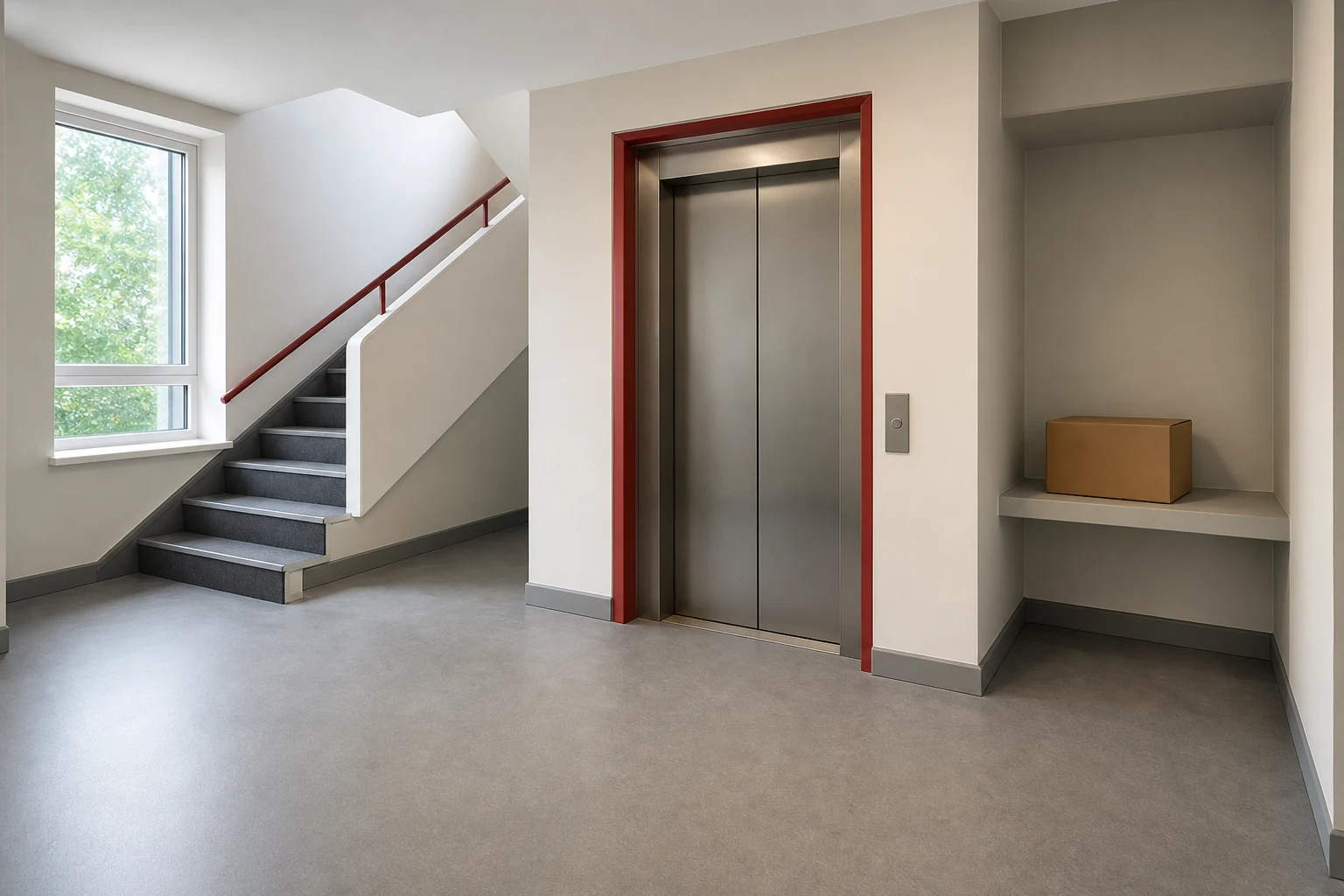
Stairs and lifts are often the biggest concern in flat clearance. They can be narrow, awkward or busy, and they may be the only route out. The safest approach is to assess the items and the route before moving anything heavy.
For stairs, the team will usually consider weight, grip, turns, landings and visibility. Heavy furniture may need two people, sometimes more, depending on the size and shape. Drawers, cushions, shelves and loose parts can be removed first to make the item easier to control. Where furniture is too large to move safely as one piece, dismantling it may be the better option.
Stairwells should be kept as clear as possible. Bags and boxes are best carried down in manageable loads rather than stacked on landings. This reduces trip risks and keeps an escape route available. If residents need to use the stairs during the clearance, the team should make space and wait until the route is clear.
Lifts can make a flat clearance more straightforward, but they still need sensible handling. The team may check the lift size, weight limit and whether protective care is needed around doors and panels. Large items should not be forced into a lift. If the lift is small or unreliable, the team may use it for lighter boxed items and carry bulky pieces by the stairs instead.
Some buildings have service lifts or preferred moving times. Others ask for lift protection or notice before large removals. These rules are usually there to protect the building and keep residents informed, so it is helpful to confirm them before the clearance date.
Parking, loading and keeping items moving
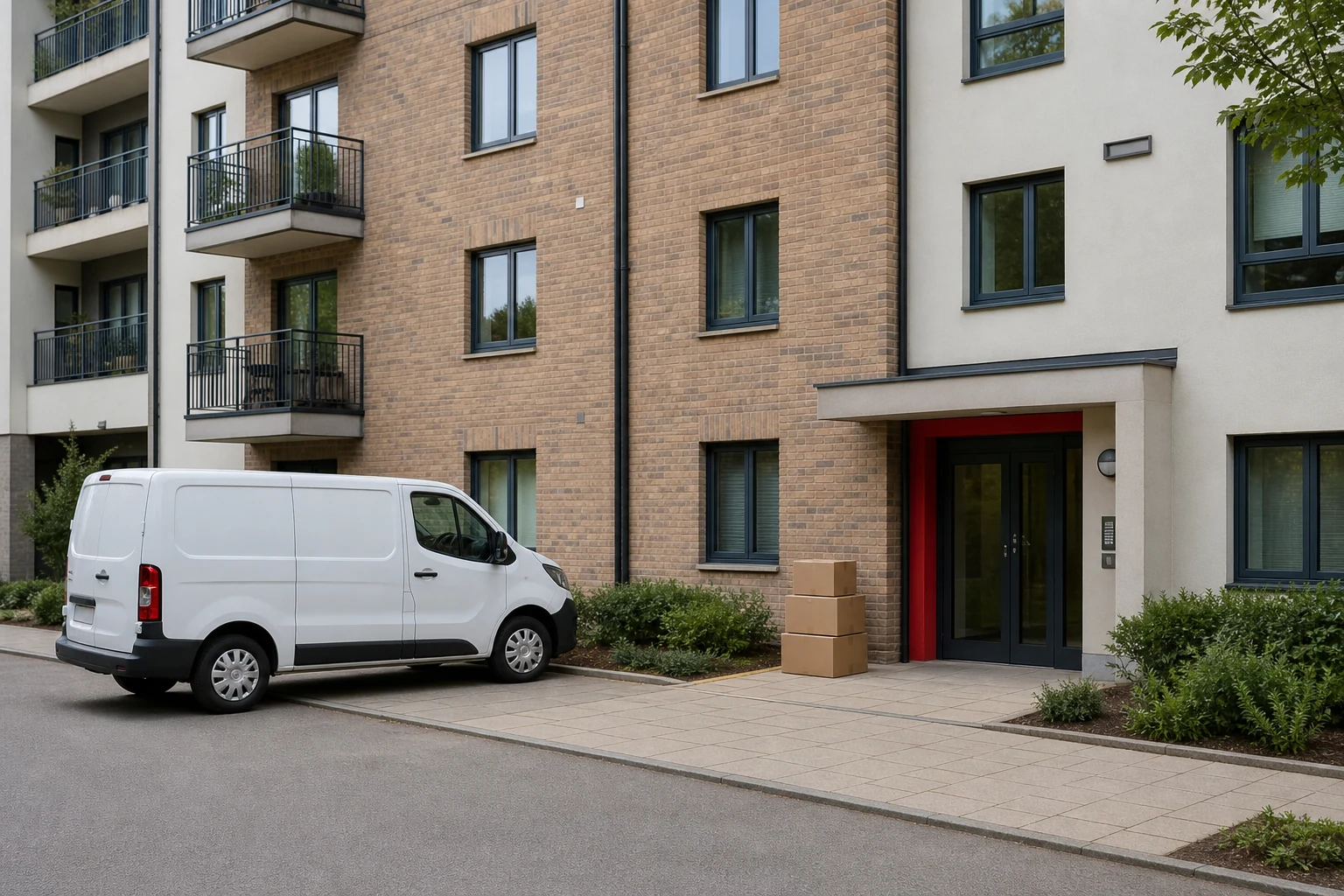
Parking access can shape the whole clearance. A vehicle that can wait close to the entrance allows the team to move items in a steady flow. If parking is further away, the team may need to use a different loading pattern, carry items in stages or allow extra time for safe movement between the building and vehicle.
The best loading area is not always the nearest space. The team has to consider whether the vehicle blocks residents, delivery drivers, emergency access, garages or bin stores. A slightly less convenient space can be better if it keeps the building entrance clear and avoids unnecessary disruption.
Clearance teams also think about the order of loading. Reusable furniture, boxed items, general waste, electrical items and recyclable materials may need separating. When that sorting happens inside the flat, the loading process outside is tidier and faster. It also reduces the chance of items being put down in the wrong place or left unattended in shared areas.
If the flat includes outdoor storage, a garage or a separate store room, it helps to mention that early. The approach may be similar to a garage clearance, with heavier, dustier or awkward items handled separately from the main living space.
Where possible, the team should avoid creating a trail of items from the flat to the vehicle. The goal is controlled movement: lift, carry, load and return. That rhythm keeps the entrance usable and makes the clearance feel calm rather than chaotic.
Reducing disruption for neighbours
Most neighbours understand that flats sometimes need to be cleared, especially after a move, bereavement, tenancy change or downsizing. Problems usually arise when people are surprised by noise, blocked entrances or items left in communal areas. A little notice can make a big difference.
If the building has close neighbours, shared parking or a controlled entrance, it can be useful to let the relevant person know when the clearance is happening. This does not need to be complicated. A simple message through the proper building channel, or a note to the caretaker or managing agent, can prevent confusion.
Professional teams reduce disruption by working in an orderly way. They keep walkways clear, avoid unnecessary noise, move items promptly and do not treat communal spaces as sorting areas. They should also be polite if residents ask what is happening or need to pass through.
Timing can help too. Some blocks are busiest early in the morning, around school runs, during lunch periods or at the end of the working day. Where there is flexibility, choosing a quieter period can make the clearance easier for everyone. If the building has set rules, those rules should guide the appointment.
For sensitive clearances, such as when a property is being cleared after a loss, discretion matters. The team should work respectfully and keep personal items covered, bagged or boxed where appropriate. The service page on bereavement property clearance may be useful if the circumstances call for extra care.
What you can do before the team arrives
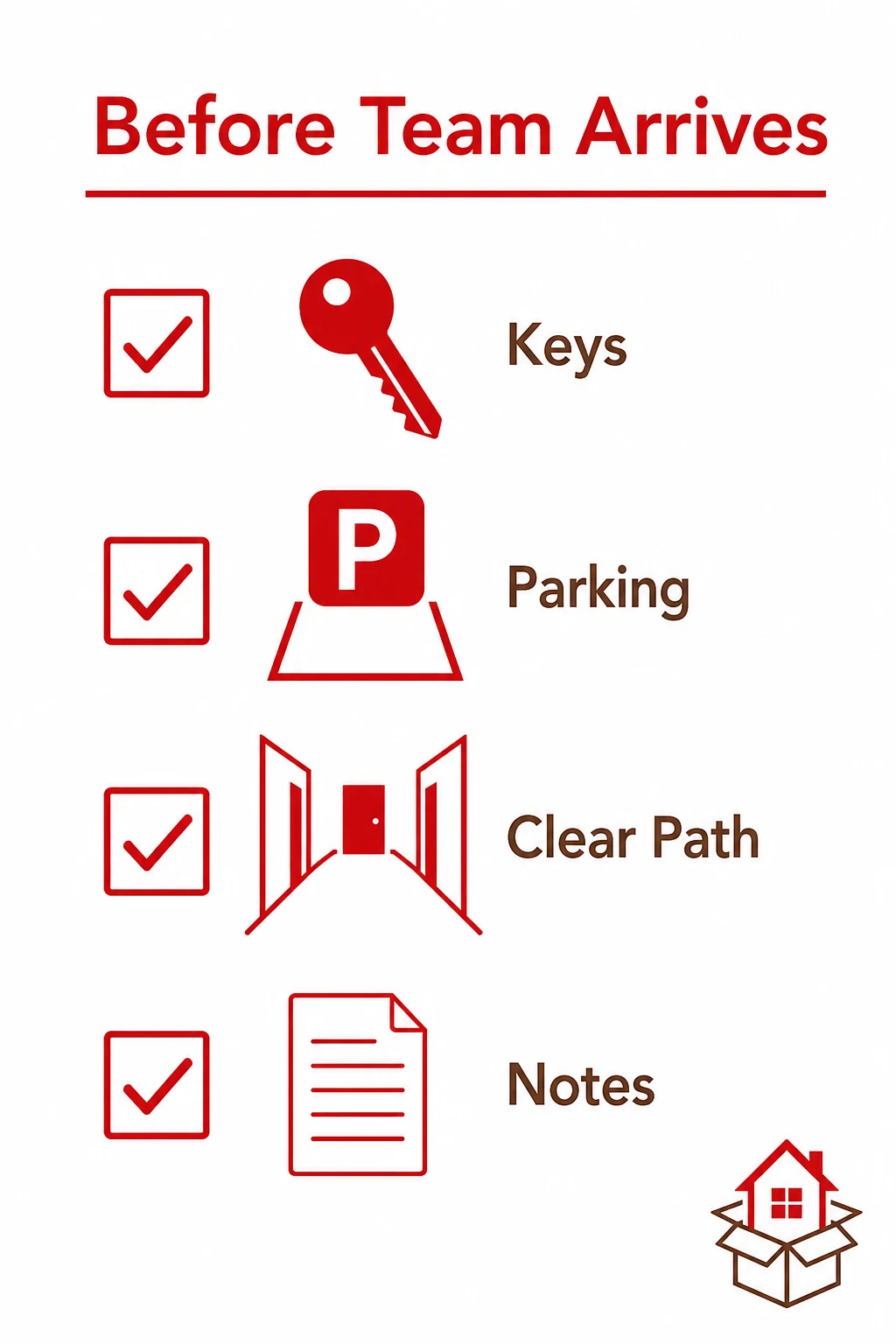
You do not need to solve every access issue yourself. A professional team should be able to advise, plan and adapt. Still, a few simple preparations can make the day smoother.
- Confirm how the team will enter the building, including entry codes, keys, fobs or concierge details.
- Tell the team whether there is a lift, and whether it is large enough for furniture.
- Share any rules from the building manager, landlord or managing agent.
- Check whether parking can be arranged near the entrance or loading area.
- Point out items that must stay, especially fixtures, appliances, documents or sentimental belongings.
- Separate important paperwork, keys, jewellery, medication and personal records before clearance begins.
- Let the team know about awkward items such as sofa beds, wardrobes, white goods or heavy boxes.
It is also sensible to decide what should happen to reusable items. Some belongings may be suitable for donation, resale, recycling or responsible disposal. If you want unwanted items to help others where possible, the article on how unwanted items can help others through charity partnerships gives useful context.
The clearer the brief, the easier it is for the team to work quickly and carefully. Photos can help at the booking stage, especially for bulky furniture, crowded rooms, storage cupboards and access points, but a good conversation is often enough to spot the main practical issues.
- Flat clearance in shared blocks depends on good access planning, including entrances, stairs, lifts and parking.
- Communal areas should be kept clear, tidy and usable while items are moved through the building.
- Large or heavy items may need dismantling, staged removal or careful handling on stairs and in lifts.
- Neighbour disruption is reduced through notice, tidy working methods and respect for building rules.
- Preparing keys, access details and instructions about what must stay helps the clearance run smoothly.
Frequently asked questions
Do I need permission to clear a flat in a shared block?
You usually do not need special permission just to clear your own flat, but some buildings have rules about parking, lift use, service entrances or moving times. It is worth checking with the landlord, managing agent, concierge or caretaker before the appointment.
Can a clearance team use a passenger lift?
Often, yes, if the lift is suitable and building rules allow it. The team should respect weight limits, avoid forcing large items inside and use stairs where that is safer or more appropriate.
What happens if furniture will not fit down the stairs?
The team will assess whether it can be dismantled, moved at a different angle or taken out in smaller parts. If an item cannot be removed safely in one piece, controlled dismantling is usually the practical option.
How can I reduce complaints from neighbours?
Give any required notice, arrange sensible parking, avoid busy times where possible and use a team that keeps shared areas clear. Most issues are avoided when the route is tidy and residents can still come and go.
Planning a flat clearance
If you are arranging a flat clearance and want the access handled properly, Houseclearancewestmidlands can talk through the building layout, shared spaces and practical details before the work begins.